ORIGINAL ARTICLES
Impact of antiglaucomatous formulations on cell viability: an in vitro study in human corneal epithelial cells
Jeremías Gallettia, Giselle M. Rodríguezb, Ailin R. Fantaconeb, María Silvia Passerinib
a Laboratorio de Inmunidad Innata, Instituto de Medicina Experimental/CONICET, Academia Nacional de Medicina, Buenos Aires, Argentina.
b Departamento Médico, Laboratorios Poen, Buenos Aires, Argentina.
Received: September 29th, 2025.
Approved: November 16th, 2025.
Corresponsal author
Giselle M. Rodríguez, BS
Laboratorios Poen
Gómez de Fonseca 652
(C1407BDR) Buenos Aires, Argentina
+54 11 4670-0100
investigación@poen.net.ar
Oftalmol Clin Exp (ISSNe 1851-2658)
2025; 18(4): e452-e458.
DOI: https://doi.org/10.70313/2718.7446.v18.n4.463
Disclosure
This research was supported by Laboratorios POEN S.A.U.
Drs. Giselle Marisa Rodríguez, Ailin Rocío Fantacone, María Silvia Passerini are employees of Laboratorios POEN S.AU.
Abstract
Objective: To evaluate the cytotoxicity of commercially available antiglaucoma formulations in human corneal epithelial cells (HCEC).
Methods: An exploratory experimental design study was developed. HCEC were exposed for 30 minutes to commercially available formulations containing different active ingredients: prostaglandin analogues, carbonic anhydrase inhibitors, an α2-adrenergic agonist, and a β-blocker. All formulations contained benzalkonium chloride (BAK), except for the latanoprost nanoemulsion, which is preserved with potassium sorbate. Cell viability was assessed using resazurin reduction. Statistical analysis was performed using one-way ANOVA followed by Dunnett’s post-hoc test (p<0.05).
Results: All formulations containing BAK showed greater toxicity compared to PBS (p<0.0001). Latanoprost 0.005% (BAK 0.02%), bimatoprost 0.01% (BAK 0.02%), brinzolamide 1% (BAK 0.01%) and timolol 0.5% (BAK 0.01%), showed significantly greater toxicity than BAK 0.01% (p<0.05). In contrast, the formulations of dorzolamide 2% (BAK 0.0075%), brimonidine 0.2% (BAK 0.005%), and bimatoprost 0.03% (BAK 0.005%) showed toxicity levels comparable to the preservative (p>0.05), as did the formulation of travoprost 0.004% (BAK 0.015%). The latanoprost 0.005% nanoemulsion (potassium sorbate 0.18%) was the only formulation that was less cytotoxic than BAK 0.01% (p<0.001).
Conclusion: These results underscore the importance of considering the entire formulation when selecting a chronic treatment. BAK-free latanoprost nanoemulsion was the only formulation that did not affect cell viability, highlighting its favourable safety profile.
Keywords: glaucoma, cytotoxicity, latanoprost, benzalkonium chloride, cornea.
Impacto de las formulaciones antiglaucomatosas en la viabilidad celular: estudio in vitro en células epiteliales corneales humanas
Resumen
Objetivo: Evaluar la citotoxicidad de formulaciones antiglaucomatosas comerciales en células epiteliales corneales humanas (HCEC).
Materiales y métodos: Se desarrolló un estudio exploratorio de diseño experimental. Las HCEC se expusieron durante 30 minutos a PBS, BAK 0,01% y formulaciones antiglaucomatosas comerciales que contienen: análogos de prostaglandinas, inhibidores de la anhidrasa carbónica, un agonista α2-adrenérgico y un β-bloqueante. Todas las formulaciones contenían cloruro de benzalconio (BAK), excepto la nanoemulsión de latanoprost, conservada con sorbato de potasio. La viabilidad celular se evaluó mediante la reducción de resazurina. El análisis estadístico se realizó utilizando ANOVA de una vía, seguido de la prueba post-hoc de Dunnett (p<0,05).
Resultados: Todas las formulaciones que contenían BAK mostraron una toxicidad mayor al PBS (p<0,0001). Las formulaciones de latanoprost 0,005% (BAK 0,02%), bimatoprost 0,01% (BAK 0,02%), brinzolamida 1% (BAK 0,01%) y timolol 0,5% (BAK 0,01%), mostraron una toxicidad significativamente mayor que el BAK 0,01% (p<0,05). En contraste, las formulaciones de dorzolamida 2% (BAK 0,0075%), brimonidina 0,2% (BAK 0,005%) y bimatoprost 0,03% (BAK 0,005%) mostraron niveles de toxicidad comparables al conservante (p>0,05), al igual que la formulación de travoprost 0,004% (BAK 0,015%). La nanoemulsión de latanoprost 0,005% (sorbato de potasio 0,18%) fue la única menos citotóxica que el BAK 0,01% (p<0,001).
Conclusiones: Estos resultados subrayan la importancia de considerar la formulación completa al seleccionar un tratamiento crónico. El latanoprost en nanoemulsión sin BAK fue la única formulación que no alteró la viabilidad celular, lo que destaca su perfil de seguridad.
Palabras clave: glaucoma, citotoxicidad, latanoprost, cloruro de benzalconio, córnea.
Impacto de formulações antiglaucoma na viabilidade celular: um estudo in vitro em células epiteliais da córnea humana
Resumo
Objetivo: Avaliar a citotoxicidade de formulações comerciais antiglaucoma em células epiteliais da córnea humana (HCEC).
Materiais e métodos: Foi realizado um estudo exploratório com delineamento experimental. As HCEC foram expostas por 30 minutos a PBS, BAK a 0,01% e formulações comerciais antiglaucoma contendo análogos de prostaglandinas, inibidores da anidrase carbônica, um agonista α2-adrenérgico e um β-bloqueador. Todas as formulações continham cloreto de benzalcônio (BAK), exceto a nanoemulsão de latanoprost, que foi preservada com sorbato de potássio. A viabilidade celular foi avaliada pela redução da resazurina. A análise estatística foi realizada utilizando ANOVA de uma via, seguida pelo teste post-hoc de Dunnett (p<0,05).
Resultados: Todas as formulações contendo BAK apresentaram maior toxicidade do que a solução salina tamponada com fosfato (PBS) (p<0,0001). As formulações de latanoprost 0,005% (BAK 0,02%), bimatoprost 0,01% (BAK 0,02%), brinzolamida 1% (BAK 0,01%) e timolol 0,5% (BAK 0,01%) apresentaram toxicidade significativamente maior do que a formulação com BAK 0,01% (p<0,05). Em contrapartida, as formulações de dorzolamida 2% (BAK 0,0075%), brimonidina 0,2% (BAK 0,005%) e bimatoprost 0,03% (BAK 0,005%) apresentaram níveis de toxicidade comparáveis aos do conservante (p>0,05), assim como a formulação de travoprost 0,004% (BAK 0,015%). A nanoemulsão de latanoprost 0,005% (sorbato de potássio 0,18%) foi a única menos citotóxica que o BAK 0,01% (p<0,001).
Conclusões: Estes resultados reforçam a importância de se considerar a formulação completa na seleção de um tratamento crônico. A nanoemulsão de latanoprost sem BAK foi a única formulação que não comprometeu a viabilidade celular, destacando seu perfil de segurança.
Palavras-chave: glaucoma, citotoxicidade, latanoprost, cloreto de benzalcônio, córnea.
Introduction
Open-angle glaucoma is a chronic disease characterized by progressive optic nerve damage and visual field loss that can ultimately lead to blindness due to asymptomatic elevated intraocular pressure. Currently, the only established medical approach is IOP reduction, which increases the likelihood of delaying or halting the progression of visual field deterioration1-3.
Although effective in controlling disease progression, chronic exposure to ophthalmic antiglaucoma medication may compromise ocular surface integrity, particularly due to the presence of preservatives4-5. Benzalkonium chloride (BAK) is a widely used preservative for its antimicrobial properties and has been shown to induce cytotoxic effects on the ocular surface through mechanisms such as reactive oxygen species generation, inflammatory cascade activation, and induction of apoptosis and cell death, ultimately contributing to ocular discomfort and inflammation1, 6-8.
Given that glaucoma treatment often requires lifelong administration of topical medication, repeated exposure to preservatives and active compounds may lead to cumulative damage to the ocular surface, triggering symptoms such as dryness, irritation and inflammation, which ultimately can affect treatment adherence and quality of life1.
Evaluating epithelial cytotoxicity of commercially available formulations rather than isolated compounds provides clinically relevant insights that may inform therapeutic choices and promote safer prescribing practices in glaucoma management. This exploratory study aimed to assess the cytotoxic effect of several commercially available antiglaucoma eye drops on human corneal epithelial cells. By comparing formulations containing different active compounds and preservative concentrations, including one formulation with an alternative preservative, this study seeks to provide preliminary insights into the relative cytotoxicity of different treatments and to highlight potential implications for relevant clinical decision-making. This exploratory study aimed to evaluate in vitro cytotoxicity of diverse commercially available antiglaucoma formulations on human corneal epithelial cells (HCEC).
Methods
An exploratory experimental design study was developed. The formulations tested included prostaglandin analogues, carbonic anhydrase inhibitors, alpha-2 agonists, and beta-blockers. The study was conducted using commercially available products and approved by the Argentine regulatory authority. All formulations contained benzalkonium chloride (BAK) as preservative, except for latanoprost nanoemulsion (Louten™ emulsión, Poen Laboratories), which is preserved with potassium sorbate (0.18%). BAK concentrations ranged from 0.005% to 0.02%. Specifically, bimatoprost 0.03% (Lumigan™, AbbVie) and brimonidine tartrate 0.2% (Alphagan™, AbbVie) contained BAK at 0.005%; dorzolamide 2% (Glaucotensil™ D, Poen Laboratories) contained BAK at 0.0075%; brinzolamide 1% (Azopt™, Alcon) and timolol 0.5% (Plostim™, Novartis) contained BAK at 0.01%; travoprost 0.004% (Arvo™, Elea) contained BAK at 0.015%; and latanoprost 0.005% (Xalatan™, Pfizer) and bimatoprost 0.01% (Lumigan™ RC, AbbVie) contained BAK at 0.02%.
Human corneal epithelial cells were cultured under standard conditions (37°C, 5% CO₂) in appropriate culture medium. Cells were seeded in 96-well plates and allowed to adhere for 24 hours prior to treatment. Subsequently, they were incubated with 100 μL of each ophthalmic formulation or Phosphate Buffered Saline (PBS), plus 20 μL of culture medium for 30 minutes. After incubation, cells were washed and incubated with fresh culture medium containing resazurin for up to 3 hours. Each condition was tested in three independent experiments; each performed in triplicate.
Cell viability was assessed by measuring resazurin reduction. Fluorescence was measured at 590 nm (excitation at 560 nm) using a plate reader. Results were expressed as a percentage of cell viability relative to PBS control.
Data was analysed using one-way ANOVA followed by a Dunnet post-hoc test, considering statistically significant differences at p<0.05. Values are presented as mean ± standard deviation.
Results
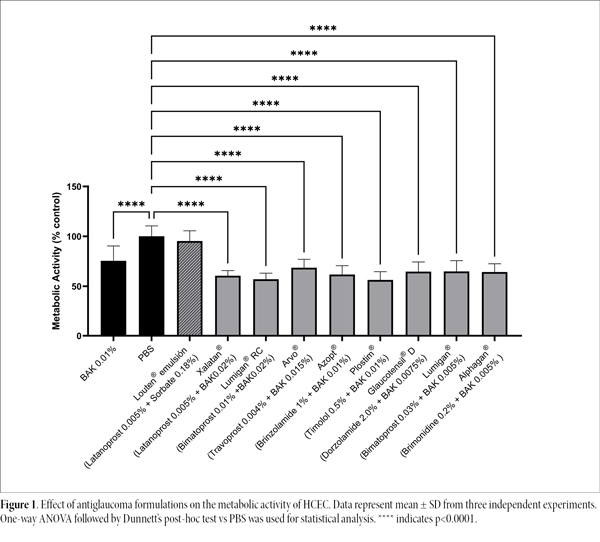
All formulations containing BAK showed greater toxicity compared to PBS (p<0.0001) (Fig. 1). Interestingly, latanoprost nanoemulsion 0.005%, which contains potassium sorbate instead of BAK, preserved metabolic activity at levels comparable to those observed in the PBS (p>0.05), suggesting minimal cytotoxicity under the tested conditions (Fig. 1).
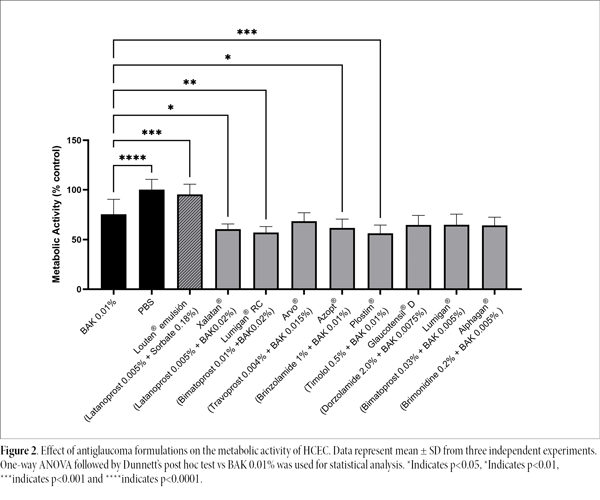
Latanoprost 0.005% (BAK 0.02%), bimatoprost 0.01% (BAK 0.02%), brinzolamide 1% (BAK 0.01%) and timolol 0.5% (BAK 0.01%), showed significantly greater toxicity than BAK 0.01% (p<0.05). In contrast, the formulations of dorzolamide 2% (BAK 0.0075%), brimonidine 0.2% (BAK 0.005%), and bimatoprost 0.03% (BAK 0.005%) showed toxicity levels comparable to the preservative (p>0.05), as did the formulation of travoprost 0.004% (BAK 0.015%). The latanoprost 0.005% nanoemulsion (potassium sorbate 0.18%) was the only formulation that was less cytotoxic than BAK 0.01% (p<0.001) (Fig. 2).
Discussion
This study evaluated the cytotoxic effects of commercially available antiglaucoma formulations on human corneal epithelial cells using a resazurin-based viability assay. The results demonstrated a significant reduction in metabolic activity across all formulations containing BAK, indicating corneal epithelial cytotoxicity. In contrast, consistent with previous studies, latanoprost nanoemulsion —containing potassium sorbate— preserved cell viability, suggesting a safer profile under the tested conditions9. These findings align with prior reports on BAK-associated toxicity and underscore the importance of preservatives in glaucoma therapy.
A key strength of this study lies in the exclusive use of commercial ophthalmic formulations, identical to those administered to patients in routine clinical practice. This methodological choice enhances the translational relevance of the findings, as it accurately reflects the potential cytotoxic impact of antiglaucoma treatments as they are actually delivered. Unlike other studies that evaluate isolated active ingredients or modified vehicles, our approach provides direct evidence regarding the safety of market-available products, which is particularly valuable when assessing long-term glaucoma therapy associated risks.
As this is a preliminary experimental study, methodological simplicity and assay sensitivity were prioritized. The exclusive use of the resazurin assay was justified by its ability to detect early metabolic alterations and it provided a robust first-line screening of the potential cytotoxic effect of the tested formulations. Given the exploratory nature of the work, a single cell viability assessment technique was selected. Employing human corneal epithelial cells as an in vitro model adds physiological relevance to the study, as these cells constitute the first line of contact with topical ophthalmic formulations. This model allows for the assessment of direct cytotoxic effects on the ocular surface.
Formulations containing BAK concentrations ≥ 0.01%, such as latanoprost 0.005%, brinzolamide 1%, bimatoprost 0.01%, and timolol 0.5% showed significantly greater toxicity than BAK 0.01% alone. Dorzolamide 2.0% containing BAK at 0.0075%, brimonidine tartrate 0.2%, and bimatoprost 0.03%, containing BAK at 0.005%, exhibited comparable cytotoxicity to BAK 0.01%. These findings suggest that the observed cytotoxicity may result from a combined effect of BAK and each active compound7, 9-13. Interestingly, travoprost 0.004% with 0.015% BAK did not exhibit greater cytotoxicity than BAK 0.01%, consistent with previous observations that different active compounds may contribute variably to the overall cytotoxic effect of ophthalmic formulations. Previously, Kahook et al. showed that travoprost with 0.015% BAK was less cytotoxic than tafluprost with 0.01% BAK14. Our observations support the notion that reducing or eliminating BAK concentration may, in most cases, mitigate therapy-related toxicity.
Previous studies have shown that latanoprost nanoemulsion prevents BAK-associated cytotoxicity and improves signs and symptoms of ocular surface disease compared with BAK-preserved latanoprost 0.005% solution15-16. In addition, the nanoemulsion may also reduce the intrinsic toxicity of latanoprost itself, possibly due to the incorporation of the active ingredient within a nanocarrier delivery system.
Although the overall effect is primarily influenced by preservatives and the active ingredients, it is also important to consider other factors, such as pH and osmolarity, which are determined by the entire formulation. These parameters were not evaluated in this study but should be considered when assessing the cytotoxicity of ophthalmic formulations15, 17.
The present study acknowledges certain limitations. The use of a single cell line and a single viability assay restrict the ability to explore the underlying mechanisms in detail. Moreover, in vitro conditions do not accurately reproduce relevant physiological factors, such as dilution by the tear film, blinking, or residence time on the ocular surface, of each formulation all of which may influence in vivo epithelial cytotoxicity. Nevertheless, the findings presented here provide a valuable starting point and support the development of future investigations incorporating complementary techniques that more faithfully simulate ocular physiology and validate the observed effects.
Conclusion
These results underscore the importance of considering the entire formulation when selecting a chronic treatment. BAK-free latanoprost nanoemulsion was the only formulation that did not affect cell viability, highlighting its favourable safety profile. The clinical significance of these results should be evaluated in future studies.
References
LEYENDAS
Figure 1. Effect of antiglaucoma formulations on the metabolic activity of HCEC. Data represent mean ± SD from three independent experiments. One-way ANOVA followed by Dunnett’s post-hoc test vs PBS was used for statistical analysis. **** indicates p<0.0001.
Figure 2. Effect of antiglaucoma formulations on the metabolic activity of HCEC. Data represent mean ± SD from three independent experiments. One-way ANOVA followed by Dunnett’s post hoc test vs BAK 0.01% was used for statistical analysis. *Indicates p<0.05, *Indicates p<0.01, ***indicates p<0.001 and ****indicates p<0.0001.